Our film hopes to have a surprise unexpected twist and in search of maximizing our chances of creating a good suspenseful scene we researched the mystery genre.. The camera angles, movements, and shots commonly used in mystery consist of: High and low angles, Close-up and Extreme Close-up shots, Dolly movements, over the shoulder shots, and POV shots. Directors like to use high angles to prove authority and power. Low angles are used to show weakness and fear. The whole idea in mystery movies is to show the suspense and fear of the characters, and the camera angles are very important. Close-ups and extreme close-ups are used so the audience can convey the emotions and allow the audience to kind of depict the characters mindset, can be used to give another meaning behind a character's words. Dolly Movements create a feeling of tension and urgency. Over the shoulder shots show either what's lingering in the back or we can get a point of view of what's going on in from of the ...
Since our film has to do with crime, True Crime is another genre we should research. The camera angles, movements, and shots commonly used in True crime are: High and low angles, Close-up and Extreme Close-up shots, Dolly movements, Handheld shots, and over the shoulder shots. Directors like to use high angles to prove authority and power. Low angles are used to show weakness and fear. The whole idea in Crime Movies is to show the power and fear, they're very important. Close-ups and extreme close-ups are used so the audience can convey the emotions and allow the audience to kind of depict the characters mindset, can be used to give another meaning behind a character's words. Dolly Movements create a feeling of tension and urgency. Handheld shots aren't usually still. They are shaky and unstable; it gives the effect of disorientation and uncertainty. Over the shoulder shots show either what's lingering in the back or we can get a point of view of what's going on in...
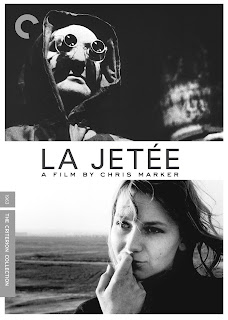
Le Jetée is a black and white science fiction short film that was directed by Chris Marker in 1962. The film tells the story of a man who is subjected to experiments involving time travel after being imprisoned in a dystopian future society. Through the use of still images, the film explores themes of memory, identity, and the effects of trauma. 12 Monkeys, on the other hand, is a full-length feature film that was released in 1995 and directed by Terry Gilliam. Like Le Jetée, the film is based on the premise of time travel and explores themes of memory, identity, and the effects of trauma. However, 12 Monkeys expands upon these themes and adds additional plot elements, such as a dystopian future and a complex plot involving multiple characters and their interconnected stories. One key difference between the two films is their visual style. Le Jetée is a black and white film that primarily consists of still images, with only a few brief moments of movement. In contrast, 12 Monkeys...
Comments
Post a Comment